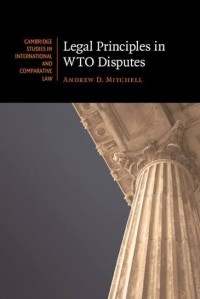
book
Legal Principles In WTO Disputes
Having passed its thirteenth anniversary, the World Trade Organization (WTO) has become one of the most important international organisations in existence. As the only global intergovernmental organisation concerned with tje rules of trade between nations, it is the learding forum for trade negotiations and for the resolution of trade disputes. Its dispute settlement system has attracted enormous interst because of its binding , rule-oriented nature and its well-established appeals system, both a rarity at the international level. More than 360 disputes have been brought to the WTO since its creation in January 1995,2 and the recommendations of WTO Panels and the Appellate Body frequently generate intense controversy. These recommendations often require Members to change their measures3 to bring them into compliance with WTO obligations, which may have significant economic consequences for companies, consumers and works, as well as major political implications for governments. Panel and Appellate Body reports are therefore carefully scrutinised, and WTO Members and academics alike are quick to pounce on perceived failures in the resolution of disputes under the Dispute Settlement Understanding (DSU). The Appellate Body has traditionally adopted a conservative approach to interpreting and applying the WTO agreements, perhaps in view of the vigotous debates surrounding its decisions and in order to maintain legitimacy of the organisation in the minds of the various WTO players. Several years ago, Weiler referred to the 'almost obsessive attempts of the Appellate Body to characterize wherever possible .... wide-ranging, sophisticated, multifaceted and eminently legitimate interpretations of the Agreement as "textual" resulting from the ordinary meaning of words'4.
Ketersediaan
Informasi Detail
- Judul Seri
-
-
- No. Panggil
-
382.9 And l
- Penerbit
- New York : Cambridge University Press., 2011
- Deskripsi Fisik
-
308 hlm. : 23 cm.
- Bahasa
-
Inggris
- ISBN/ISSN
-
978-1-107-40163-1
- Klasifikasi
-
-
- Tipe Isi
-
-
- Tipe Media
-
-
- Tipe Pembawa
-
-
- Edisi
-
First Paperback Edition
- Subjek
- Info Detail Spesifik
-
-
- Pernyataan Tanggungjawab
-
-
Versi lain/terkait
Tidak tersedia versi lain
Lampiran Berkas
Komentar
Anda harus masuk sebelum memberikan komentar
 Komputer, Informasi, & Karya Umum
  Pengembangan Diri
  Agama
Agama  Ilmu-Ilmu Sosial
  Bahasa (Linguistik)
  Sains / Ilmu Murni
  Teknik dan Manajemen
  Kesenian, Hiburan, dan Olahraga
  Fiksi dan Kesusastraan
  Sejarah & Geografi